

Happy holidays! Hope y’all are enjoying the end-of-the-year. For me though, this is the time where I’m probably the most busiest both in my day job and hobby-wise churning out the J.League reviews. On top of that, the winter transfer window is just a week away so there are a lot of players I want to write about that will probably get moves soon. In some cases like Keito Kumashiro, his move was already announced last week (to Eintracht Frankfurt by the way, if you’ve been living under a rock)! Maybe I’ll still make a short thread on Twitter/BlueSky on him? We’ll see. I wish I could clone myself, there are so many players including Kumashiro that I want/wanted to write about…
Also, this past Monday was the 3rd anniversary of Shogun Soccer! Thanks to all those who’ve supported my work. With the 100 Year Vision League & the 2026 World Cup next year, I’m hoping to provide even more insight in 2026 & the years to come.
Anyway, today’s topic is Ryunosuke Sato who really exploded after a good season on-loan at Fagiano Okayama and some good youth national team appearances, all leading to a full national team debut!
tl;dr (too long; didn’t read): Wonderful 1st touch & close control in dribbling/carrying but final 3rd output can be improved. High defensive work-rate but defensive utility limited by small size. Should be playing centrally instead of out wide.
Let’s get started!
(Edit: June 15, 2026) Looks like Sato is headed to Valencia! I wrote a slightly more updated piece on him for Hudl/StatsBomb going over his 2026 half-season back at FC Tokyo, here!
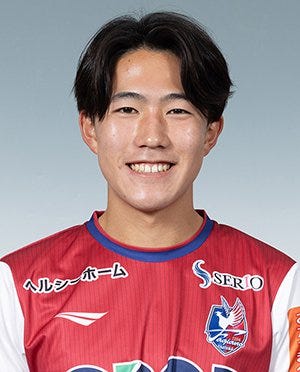
Date of Birth: October 16, 2006
Age: 19 years old
Nationality: Japan
Position: Right/Left Wing Back, Right Winger/Attacking Midfielder in a 3-4-2-1 (club), 4-2-3-1 (national team), etc.
Club: Fagiano Okayama (J1 - on loan from FC Tokyo)
Squad Number: #39 (2025 season)
Height/Weight: 1.71m // 65 kg (Source: Soccer Digest)
VIDEO NOTE: Fagiano Okayama’s HOME kits are maroon shirts with white sleeves, maroon shorts, with white lettering, maroon socks. AWAY kits are grey shirt, socks, and shorts with black lettering. Sato wears #39.
DATA NOTE: The percentile ranking stats are all from WyScout courtesy of Ben Griffis’ best XI app.
Attacking
On the ball, the thing you’ll immediately notice about Sato is his technical close ball-control initiated by his excellent first touch. He is very adept at spinning and turning forward in tight spaces due to the agility and balance afforded by his small stature. A signature move you’ll see him make often is to do a 360 degree turn with the ball to escape a tight marker and give himself space for his next action.
Sato has a preference for keeping the ball tight to his body and ideally you want to give him the ball to feet, then have him carry/dribble rather than run-on to long(er) balls into open space. A virtue that accentuates his ball control is the composure that Sato exhibits in possession. He has a calmness after winning or receiving the ball to make the right passes or carry forward under pressure from opponents.
His dribbling style is about quick changes of direction with light touches. He tends to catch defenders off-guard with how agile he can be when running with the ball. However, given his small stature it can be easy for opponents to bump him off the ball and Sato is dispossessed quite often. Sato also doesn’t have the explosiveness in his first few steps that allow him to burst past defenders with pace, which is why he relies heavily on his balance and agility instead.
As mentioned above regarding his close ball control, this aspect ties into how skilled Sato is in combination play. He is quite involved in pass-and-move sequences in small spaces. For Okayama he was adept at dropping and staying in open areas in the middle 3rd during the build-up phase. In terms of ball progression, he is less of a passer in this phase but more of a receiver who then turns to drive up the pitch. Given his experience as a #10 type player, either from Wing Back or as a Winger he shifted into more central areas on occasions to receive the ball between-the-lines. These qualities make him more of a play-maker in a possession-oriented side rather than stuck out wide as he can play passes with both feet along with his limited top speed. You see this aspect of him much more for the youth national teams.
In general, I do think Sato has great vision especially in the final 3rd but the execution can be lacking at times for more simpler passes. Of course, criticism can be difficult to direct solely on him due to his team’s quality issues in the final 3rd. As a newly promoted team, Okayama struggled mightily in attack having entered the final 3rd the second least in the entire league and entered the penalty box the fifth least which all led to the fifth worst non-penalty xG created. On top of the fact that Okayama didn’t have the ball very much in most games, some context is needed in assessing Sato’s attacking output along with his deeper position at Wing Back. Even still, it’s very clear Sato had a considerable impact on the team with his chance creation abilities.
One concern is that his aerial crossing could be better, even accounting for the fact that cross completion is very difficult in general. Sato is much better when he is able to pick out ground passes and through-balls into the box rather than having to loft it in the air. Sato does take set-pieces often for both club and country but I do feel that’s somewhat a result of a process of elimination given he is not going to be much use in the box anyway. Sato can clearly provide the occasional good aerial delivery but it is something he could work on to be more well-rounded as a shot supplier in the final 3rd.
The headline grabber for Sato this season was his 5 goals, however this came from just 2.46 xG and 3.37 xG On-Target (Source: FotMob) so there was a solid chunk of luck or streaky good finishing there from xG over-performance. In terms of technique though, Sato does have decent placement and prefers to stroke his shots with the inside of his foot. He doesn’t take too many shots with his laces and doesn’t get a whole lot of power on them anyway.

Of course, this is coming off a small-ish sample size (33 shots) considering his deeper position and Okayama’s blunted attack making it difficult in various situations to complete a pass or shot (of varying quality). Still, his profligacy shows up in the youth national team setting too. Sato is more of a creator than a goal scorer himself.
Defending
Sato’s time at Fagiano Okayama this past season highlighted his extremely high defensive work-rate. Sato presses with intensity but of course, it’s not that he’s simply running around a lot. What I like about his defending is that he is very good at setting up his body shape properly when approaching an opponent to cut their options.
Sato has a good understanding of defensive strategy across different club/national team contexts and has an awareness of his surroundings as he pushes forward to press. He makes things easier for himself and his fellow defenders by scanning his teammate’s positioning before challenging.
Unfortunately, Sato’s downside as a defender comes from the fact that he is dribbled past very often. His small body means he can’t really block off or stop dribblers easily. Naturally struggles in long aerial balls as well. His stature also means he can’t quite block opponent crosses either when defending the wings. While Sato does get out-muscled, the positive is that he doesn’t pull out of duels. Sato always fights for the ball and perseveres despite his physical disadvantages.
An aspect of defending that Sato improved on a lot in my opinion is his ability in a block. Sato built a good understanding of his place in the Back 5 at Okayama and developed a good awareness of runners in-behind and ability to shift his body shape to force opponents wide in the mid-block. Sato’s experiences at Okayama in the top flight as well as his time at various levels of the national team demonstrated his ability to defend as part of a unit from a number of different positions on both sides of the pitch.
Physicality
Sato possesses incredible physical output. Throughout the year he has shown the endurance to play at high intensities for extended periods of time. Looking at the J.League’s official data, Sato frequently shows up as the highest (or close to) within his team for sprints and distance covered in defense and attack, across all 3rds of the pitch. You can browse the data here. The sprinting/distance covered metrics across different contexts are the bottom eight selections in the first drop-down menu on the left (his name in Japanese is “佐藤 龍之介”).
As mentioned in a previous section, his acceleration is just about OK which limits his potential to play as a touch-line winger, especially if tasked with hitting large open spaces. His actual top speed is somewhat fast at 33 km/h but is not anywhere near the elite tier even in the J.League. I’ve discussed Sato’s body size disadvantages a lot already so I won’t reiterate all the negatives again but he does have a real good sense of balance and agility that helps him on the ball.
Conclusion
Ryunosuke Sato is another player from FC Tokyo’s academy production line having been with the club since 2016 as a 9~10 year old. Throughout his youth club and national team appearances he had shown potential but it was only from this year that the 19 year old got a taste of regular top flight action. From an unfamiliar Wing Back position Sato exhibited enormous physical output up-and-down the wing while maintaining his great technical qualities. Whether in transition or in possession sequences, Sato’s ability to receive and carry was an important part of Okayama’s ball progression. In the final 3rd his dribbling made him a threat, although his final output was somewhat limited by his own lack of execution and team strength issues.
The biggest concern for me right now is that Sato is continuously being mis-profiled as a wide player when he should be playing more centrally as a #10, basically given more freedom to drift and combine where he pleases. While his physical endurance is considerable, I’ve made many mentions of his limited top-end speed and explosiveness that prohibit his potential as a winger in a top European league.
The output in the data radar below is skewed by his deeper position along with team strength and playing style. When looking at Sato’s data here (or in other platforms that might be available to you), one must understand the context of Fagiano Okayama as a newly promoted team, this season being their debut at the J1 top flight level. Fagiano Okayama were a middle-press/block team with heavy emphasis on transitions from short or long counterattacks. As mentioned previously, they had the second lowest average ball possession in the league which meant limited opportunities for Sato to get on the ball and do interesting stuff. For more insight into Sato as an attacker it is worth looking deeper into his youth and full national team appearances as well as what happens to him next season with FC Tokyo.

Sato’s performances across the contexts of his club team and national team highlight his adaptability to different play-styles. Sato demonstrated a lot of growth to adapt to a completely new team and win a spot on a promoted team desperate for results at a new position at Wing Back. Originally playing from the Right, during the season he then took on another challenge of playing on the opposite Left flank when asked by his manager days before an actual game. I was initially very skeptical of the move as a young, small attacker going on loan to a newly promoted team is usually a recipe for disaster but Fagiano Okayama’s staff and teammates provided him with a very good nurturing environment for him to succeed.
Sato’s future is obviously not at Wing Back but his experiences there have made him a more well-rounded player, presenting a remarkable ability to support his defense either in a block or in the press. To get the best out of Sato you want to give him fast runners around him out wide to give him targets for his through-balls. A striker who can make smart runs behind and/or willing to drop and combine with Sato would also add synergy. On the defensive end, his lack of size is a concern so you do need to make sure the rest of the team is balanced in terms of bigger/aerial profiles (especially for set-piece defending).
Ryunosuke Sato offers a compelling case of another young Japanese attacker with a high potential ceiling but patience is needed to iron out his flaws. He not only needs to get playing time in his natural attacking position but also be on a team where he can get more touches on the ball compared to his time at Okayama. This is so he can work on his consistency and get more practice with his decision making. Whether he can get that at his parent club FC Tokyo given the capital club’s recent struggles remains to be seen…1
I do think Sato has a future in a top 5 European league, although again aside from his considerable endurance the other limited physical traits gives me some pause on whether he can make it to the elite tier clubs (the league title, Champions League contending clubs). A big question is whether a “top” team wants to “get in early” and gamble that he can handle the big step-up as well as start credibly improving his production by placing him alongside better skilled players.
Ryunosuke Sato’s initial priority when going to Europe should be to find a team that will give him game-time in a 1st division first and foremost, even if it’s more likely to be in a top 7~9 league rather than a top 5 one. In that sense, his choice to stay with FC Tokyo to guarantee playing time at his hometown club ahead of the World Cup rather than a risky European transfer may prove fruitful for his future prospects. A World Cup appearance will make a sterling case for his transfer to Europe in the future but he has many rivals across both Wing Back and attacking positions so it won’t be easy2.
Overall, here are some potential routes of Ryunosuke Sato’s career progression:
Bear case3: Continues to be mis-profiled as a wide player and doesn’t get the necessary minutes as a #10. His lack of speed and size limits his potential to a mere hard-working Wing Back/Wide Midfielder with good technical qualities.
Neutral case: Returns to FC Tokyo mixing time at both Wing Back and as an attacker before heading off to Europe for a non-top 5 league club in the summer of 2026 or winter 2027. Continues to play out wide to somewhat limited effect and doesn’t get into a top 5 league for the first few years in Europe.
(Admittedly very) Bull case: Sato plays in his favored #10 position for the majority of minutes at FC Tokyo and (somehow) manages to get on the plane for the 2026 World Cup. Some decent cameos there push him up the priority list of European clubs who have been tracking him for several years. Buoyed with confidence, Sato immediately earns a place as a starter on a mid-table-ish team in a top 5 league.
Thanks for reading!


Resources, Limitations, etc.
Video analysis: DaVinci Resolve 18
Tactical diagrams: Tacticalista
Time period: 2025 J1 Season, Japan Youth/National team
Footage: Broadcast footage, no tactical camera
Stats: FBref, Transfermarkt, WyScout, FotMob
Player radars: Ben Griffis
See any of the FC Tokyo sections in my J.League Season Reviews over the past few years for all the gory details…
Currently, Ritsu Doan is 100% the Right Wing Back starter. Then it’s Junya Ito (who is older and has had injury problems of late) followed by Yukinari Sugawara and Henry Mochizuki down the pecking order. Although Takumi Minamino’s devastating injury has opened up a spot in attack, that position is also jam-packed with quality players with more experience playing in Europe too.
Yeah, this is finance/stock market lingo but bear with me.